Rubicon Organics reported higher cannabis sales for its third quarter on November 16, but the growth came with a harder operating picture. Net revenue rose 17 percent from a year earlier to C$18.3 million, while adjusted EBITDA fell 17 percent to about C$1.4 million. Management said its Cascadia cultivation facility was roughly six months behind its initial production ramp.
The results, covering the three months ended September 30, offer a useful test of a familiar cannabis-business promise: more cultivation capacity can support growth, but the expense arrives before a facility necessarily reaches its intended output. Rubicon’s latest numbers show why sales, production targets and profitability need to be read together. All financial amounts here are Canadian dollars.
Higher sales did not produce higher margins
The unaudited financial statements put quarterly net revenue at C$18.260 million, compared with C$15.628 million a year earlier. Cost of sales rose to C$13.242 million from C$10.367 million. Gross profit before fair-value adjustments consequently declined to C$5.018 million from C$5.261 million, despite the stronger revenue.
That is the central tension in the report. Selling more product did not prevent the underlying gross-profit dollars from falling. For a cultivator scaling a facility, higher throughput is commercially useful only if the added revenue can absorb the operating cost attached to it.
The statements show a quarterly net loss of C$105,000, compared with net income of C$2.826 million in the comparable period. These are unaudited interim accounts; the accompanying notice says the independent auditor has not reviewed them. That qualification belongs alongside the figures when assessing the report.
What adjusted EBITDA leaves out
Rubicon’s management discussion and analysis records adjusted EBITDA of C$1.435 million, against C$1.739 million a year earlier. The reconciliation matters because this is a company-defined non-GAAP measure, rather than net profit or cash generated by operations. Its adjustments include depreciation, share-based compensation and cannabis fair-value accounting.
The treatment of Cascadia also changed. Pre-revenue startup costs were excluded from the adjusted measure in earlier periods; beginning in this quarter, those costs were no longer excluded. That makes the facility’s transition into revenue production important to understanding the comparison, rather than simply reading the percentage change as a stand-alone verdict.
There was sequential improvement: adjusted EBITDA was above the second quarter’s C$1.128 million. Net revenue, however, was slightly below the second quarter’s C$18.452 million. The latest quarter therefore supports a mixed description: annual sales growth, a modest sequential sales decline and stronger adjusted earnings than the preceding quarter.
Cascadia is now an execution question
In its results announcement, Rubicon said Cascadia contributed approximately C$2.3 million of quarterly revenue. Management described the site as about six months behind the original ramp and said it was working toward target yields by year-end. That is a management objective, not a result already achieved.
The company also pointed to production improvements at Pacifica, international sales and manufacturing investment. International markets represented 11.7 percent of quarterly net revenue, according to the release. Those channels offer another source of sales, while adding a separate question about whether export growth can be sustained alongside domestic demand.
For readers following the business, the relevant next disclosure is more than a larger harvest. It is whether consistent output converts into saleable inventory, recognized revenue and a healthier margin. Capacity announcements cannot establish those steps in advance, and this quarter’s sales increase illustrates why checking the conversion matters.
The August second-quarter announcement had already described profitability pressure from scaling Cascadia, while emphasizing rising sales and Pacifica yield improvements. The latest report therefore follows an existing operational issue. The change to watch is whether that investment phase moves toward consistent margins, rather than whether management continues to describe a growth opportunity.
Expansion targets still need operating evidence
We previously covered Rubicon’s financing for Pacifica lighting upgrades. That story concerned an investment and future capacity; Monday’s earnings report adds a later operating checkpoint. Keeping those events separate avoids presenting a capital raise as proof that its intended production gains have already arrived.
The distinction is particularly important in cannabis, where a cultivation plan can sound concrete because it is expressed in kilograms. A capacity number describes potential production under stated assumptions. It does not tell readers how much flower will meet specifications, when customers will buy it or what the business will retain after costs.
The next results should help test whether the delayed ramp is narrowing and whether spending begins to translate into better economics. Until then, Rubicon has reported real revenue growth alongside real margin pressure. Both belong in the account of the quarter, with future yield and capacity goals clearly identified as forecasts.
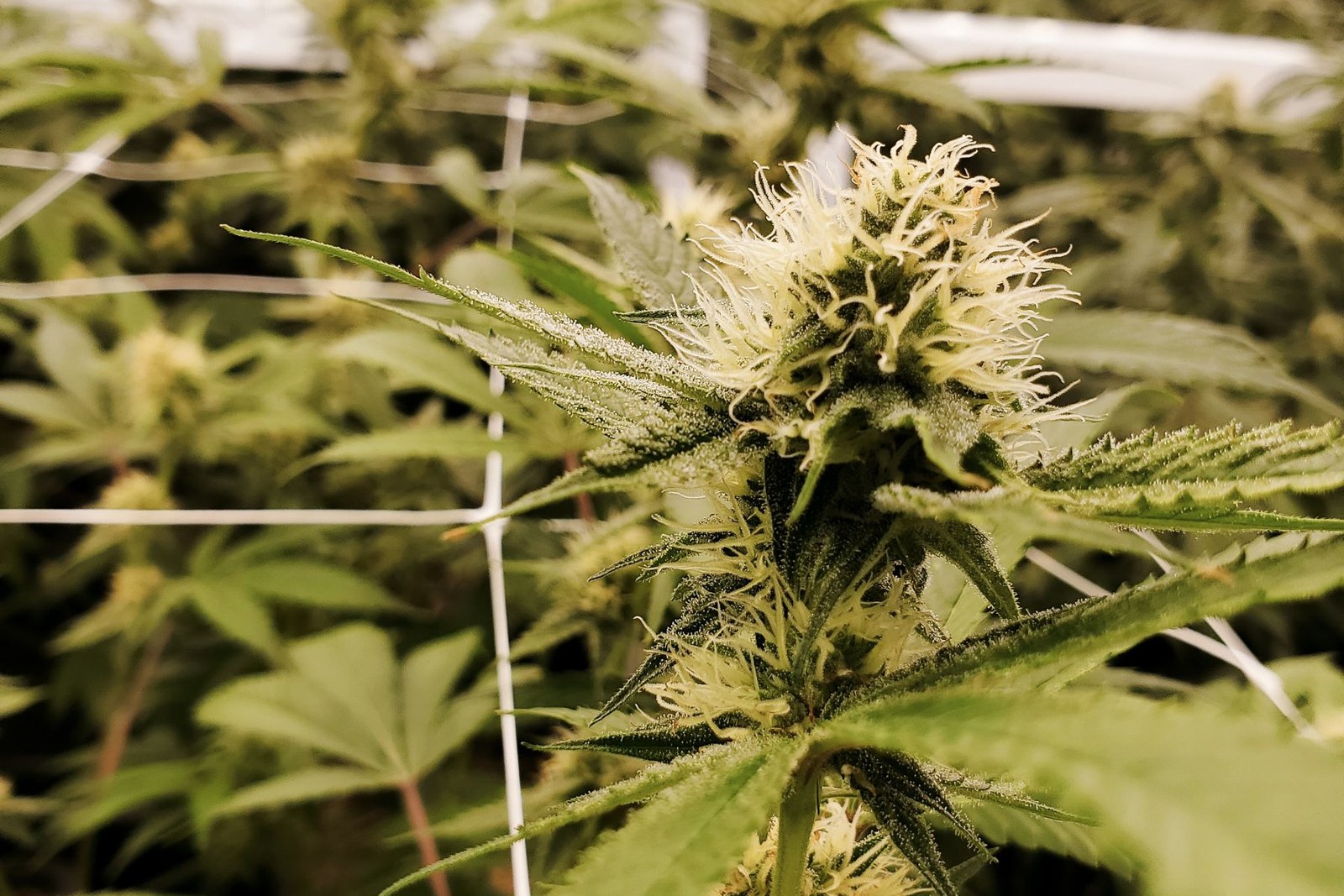
Illustrative cannabis cultivation photograph; not a Rubicon facility or named cultivar. Photo: Teanna Morgan / Pexels.





 Cannabis4 weeks ago

 Cannabis3 weeks ago

 Cannabis4 weeks ago

 Cannabis4 weeks ago


 Cannabis4 weeks ago

 Cannabis3 weeks ago

 Cannabis4 weeks ago