Village Farms International reported record cannabis sales on November 9, with international shipments helping its latest quarter while cannabis profit measures moved lower than a year earlier. The combination makes this a more revealing earnings report than a record-sales headline alone suggests: growth in one part of a cannabis business can coexist with tighter margins.
The company’s third-quarter release covers the three months ended September 30, 2026. Figures below are in U.S. dollars unless otherwise identified. These are reported operating results and management expectations, not a prediction of the company’s share price.
Cannabis sales rise, margins retreat
Village Farms reported cannabis sales of $55 million, up 3% from approximately $53.5 million a year earlier. International cannabis exports reached $20.8 million, increasing 75% year over year and remaining roughly level with the preceding quarter’s record. The export business was a prominent contributor to the growth story.
But cannabis gross margin declined to 48% from 55%. Cannabis net income fell to $7.8 million from $12 million, while adjusted EBITDA from continuing cannabis operations declined to $14.7 million from $20.2 million. The company cited softer Canadian wholesale spot pricing among the factors affecting profitability.
Those figures describe different layers of the same operation. Sales show the value of business booked. Gross margin indicates how much remains after the costs included at that stage of the accounts. Net income and an adjusted operating measure then answer further questions. A record at the top of the statement does not require a record farther down.
The group is larger than its cannabis segment
Consolidated quarterly sales were $66.9 million, compared with $66.7 million a year earlier. The company’s quarterly SEC filing reports net income attributable to shareholders of about $10 million, versus $10.2 million in the comparable quarter. Those group totals should not be substituted for the cannabis figures.
Village Farms’ operations include Canadian cannabis businesses, a U.S. CBD business, Netherlands cannabis activities and produce operations. Readers evaluating a headline about its overall performance therefore need to ask which segment produced the change. The group total and a cannabis-only comparison are useful together precisely because they have different boundaries.
That is also why adjusted EBITDA should retain its full label. It is a company-reported adjusted measure, not interchangeable with net income or money left in a bank account. When comparing cannabis businesses, start with matching periods and definitions before deciding that a larger number represents stronger underlying performance.
Quarterly cash and the longer view
The release reports $9.5 million in consolidated operating cash flow for the quarter. The filing’s nine-month statement tells a separate, longer-period story: operating cash from continuing operations was approximately $1.6 million, compared with $46.7 million in the prior-year nine-month period. Working-capital movements were a major difference in that comparison.
These figures do not contradict each other. A strong quarter can arrive after earlier cash demands, and a nine-month total incorporates all three quarters. Mixing the two periods would obscure rather than explain the business. The filing also reports about $17.3 million of capital expenditures over nine months, up from $7.1 million.
For anyone following the sector’s expansion, that creates a practical reading order: examine the quarter, then step back to the year-to-date statement, and then consider investment spending separately. The question is how the operation funds its plans over time, rather than whether one isolated cash figure looks attractive.
Expansion remains a forward-looking story
Management described the Netherlands’ second phase as fully planted and outlined further Canadian capacity work. Its Delta 2 expansion is expected to finish in the first quarter of 2027 and reach full capacity around midyear. These are expectations about future operations, which should remain clearly separated from production already achieved.
That separation is particularly important in cannabis, where a facility plan, a planted crop, a shipment and recognized revenue mark different stages. An announced expansion can establish the direction of a strategy without establishing when all of its financial contribution will appear.
Our earlier report on Cresco’s latest quarter offers another example of why sales, losses and cash flow deserve separate attention. Village Farms adds an international dimension to that conversation, alongside a clear reminder that export growth and margin pressure can appear in the same report.
The next useful checkpoint is execution: whether the outlined capacity milestones arrive, how international demand translates into shipments, and whether improved sales ultimately support profitability and cash generation. Monday’s results establish the starting figures for that assessment; they do not settle the outcome in advance.
For industry readers, the most useful comparison in the next report will use the same definitions again. Track cannabis revenue against cannabis margins, consolidated cash against consolidated cash, and completed investment against the timetable management has described. That consistent approach leaves room for both the encouraging export figures and the pressures elsewhere in the accounts, without selecting only the numbers that support a preferred narrative.
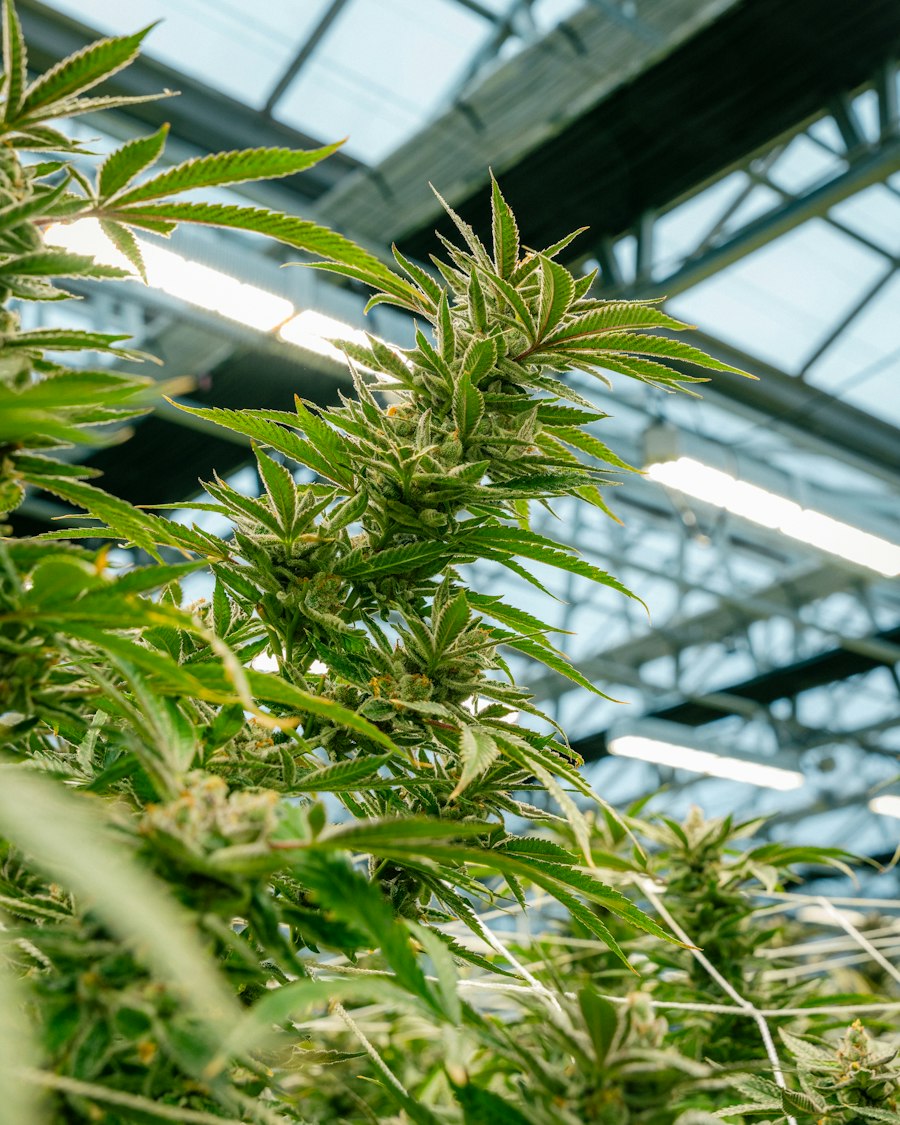
Illustrative cannabis cultivation stock photo; not a Village Farms facility. Photo: Evan Strock / Unsplash.






 Cannabis3 weeks ago

 Cannabis3 weeks ago

 Cannabis3 weeks ago

 Cannabis3 weeks ago


 Cannabis3 weeks ago

 Cannabis3 weeks ago

 Cannabis3 weeks ago