#cannabisaficionado

Industry Innovators

Casey Georgeson: Setting a Higher Standard for Clean, Green Beauty

Published

on

Casey Georgeson
Advertisement Back2Grow Advertisement

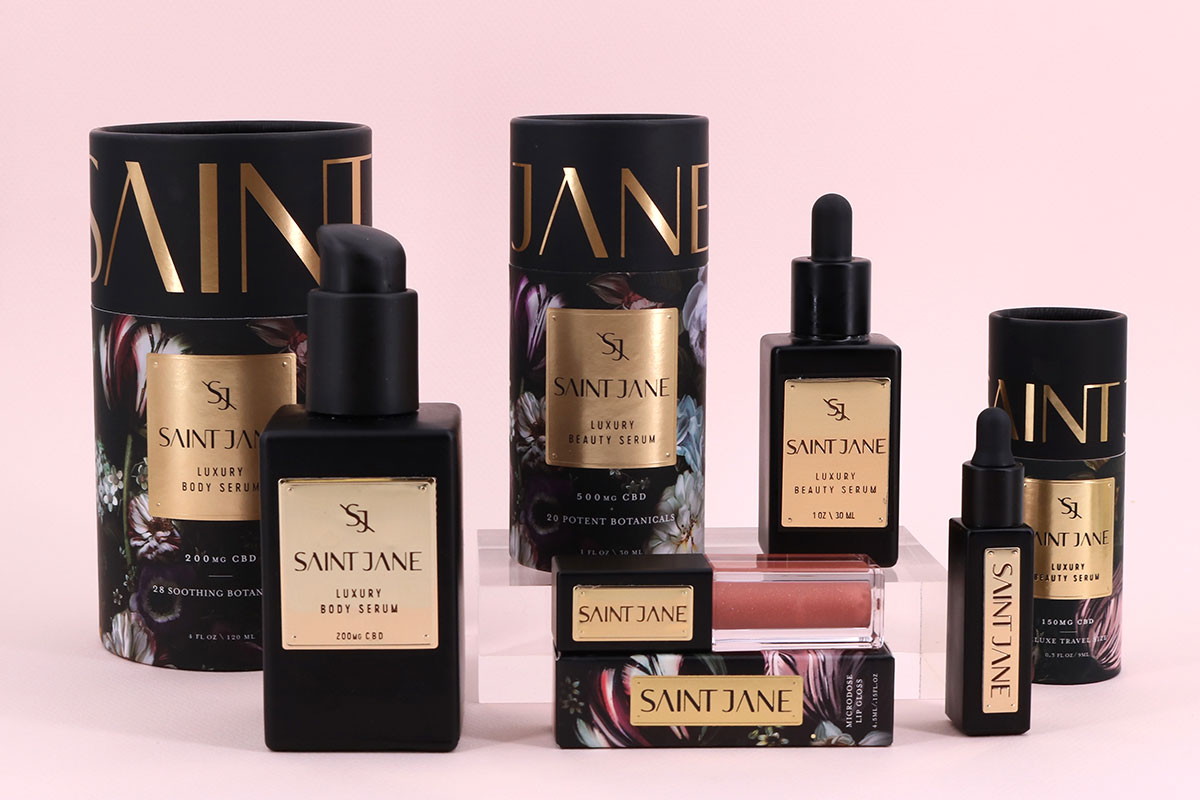
Casey Georgeson is the CEO and Founder of Saint Jane, a luxurious, 100% clean CBD beauty collection that has taken the CBD beauty category by storm since its launch in January 2019.

You could say entrepreneurialism is in her DNA. Coming from the Ernest and Julio Gallo wine family dynasty, Georgeson has spent her career developing beauty brands for Sephora, including Marc Jacobs, Disney for Sephora as well as the hugely successful wine brand, Cupcake Vineyards.

Georgeson is passionate about the powerful benefits of CBD and whole plant science. I spoke to her about her journey to becoming a cannabis entrepreneur, the importance of transparency and the story behind Saint Jane.

CA: Tell me about your journey through entrepreneurship and how you found your way to cannabis.

Casey Georgeson: My family has a history of entrepreneurship. My great-grandmother was a mail-order bride from Italy (yes that was a real thing!) who came over in the 1900s. She and my great-grandfather grew grapes in the San Joaquin Valley with their seven children. At the end of The Prohibition, still in the Great Depression, she saw an opportunity to use their vineyards for winemaking. She took out a $10,000 loan, using the farm as collateral. She gave $5,000 to her sons, the Franzia brothers, to start a winery; and $5,000 to her son-in-law, Ernest Gallo, to start a winery with his brother, Julio.

Essentially, a 4’10” mail-order bride started two of the largest wine companies out there. That story always resonated with me and even though I never had the chance to meet her — I’ve always admired the confidence it must have taken to do that as a woman in the 1930s. My uncle was also an entrepreneur and I learned a great deal from him throughout the years, watching him create a business.

I started my career as a producer for CNN and got into the wine industry as a brand creator where I developed a brand called Cupcake Vineyards. I went to business school at Stanford and interned at Sephora. It was there that I had this extraordinary training in the beauty industry and in product development and formulations. Once I graduated, I worked at Kendo, Sephora’s brand incubator. My role was to sit as the liaison between the brands we partnered with — Marc Jacobs, Elizabeth and James, Disney, Hello Kitty, Kat Von D— and articulate their vision in the world of beauty and that would ultimately lead to the building of their brands.

I had been creating brands for many years and thought I want to create my own brand at some point. It might be beauty. It might be wine. I just knew I wanted to do something on my own, but it had to be a really big idea.

When I discovered CBD in 2017, I first began really thinking about creating my own brand. It all started when I read a PopSugar article on CBD. The headline was, NATURE’S XANAX MEETS ADVIL. I was like, what is this natural miracle molecule? I immediately went to the dispensary and said to the budtender, “Show me everything you have that’s high CBD, low THC.” They showed me all these products that were really crunchy and hippie. Some formulated for the skin, some ingestible. This was in 2017.

Next to all these products that the budtender put out, was a list of all the things CBD was purported to do. You know that list, it’s very impressive and kind of shakes you to your core. Inflammation. Pain. Sleep. Anxiety. Gut health. Sleep. I thought, ‘If CBD does even one of these things, it is truly one of the most powerful skincare ingredients of our time.’ For topical use, most of the products dealt with pain management and were paired with MCT oil, because it was the easiest and it’s what was most commonly used for ingestibles. But, at the time, nobody was formulating with true skincare ingredients that would be at the level of something you would find at a luxury retailer.

That’s when I saw the opportunity. I would pair CBD with other really potent botanicals, that support the CBD mission for the skin, I knew it was an incredible idea. I went deep into learning about CBD and botanicals and Saint Jane was born.

What a journey! Can you tell me a little about the name Saint Jane?

Saint Jane has two meanings.

One, it’s the innocent side of Mary Jane, because CBD will not get you high.

Two, Saint Jane was an actual person in 1500s France. She was anointed into sainthood for healing people. Specifically, healing women, which society would otherwise never touch: the old, the very sick, unwed mothers. She dedicated her whole life to healing. Her story has been very inspiring to us because our products focus on nurturing, healing and we have a very authentic female empowerment story, as well. I have three daughters and the company is comprised of all women.

It’s truly a gift to have Saint Jane’s legacy as a foundation for the brand. Our approach is healing-centric and the way we’ve expressed that through the brand feels very authentic.
How amazing that you can pay homage to somebody who otherwise would’ve been forgotten in the mists of time, that’s beautiful.

The idea of reimagining this woman who was so important to society and culture for her to devotion to helping people, through this modern lens, is really inspiring. I had 16 years of Catholic school, yet I’m not religious. But this has inspired a renewed faith for me… in our own mission for women as Saint Jane.

What makes Saint Jane different from other CBD skincare products on the market?

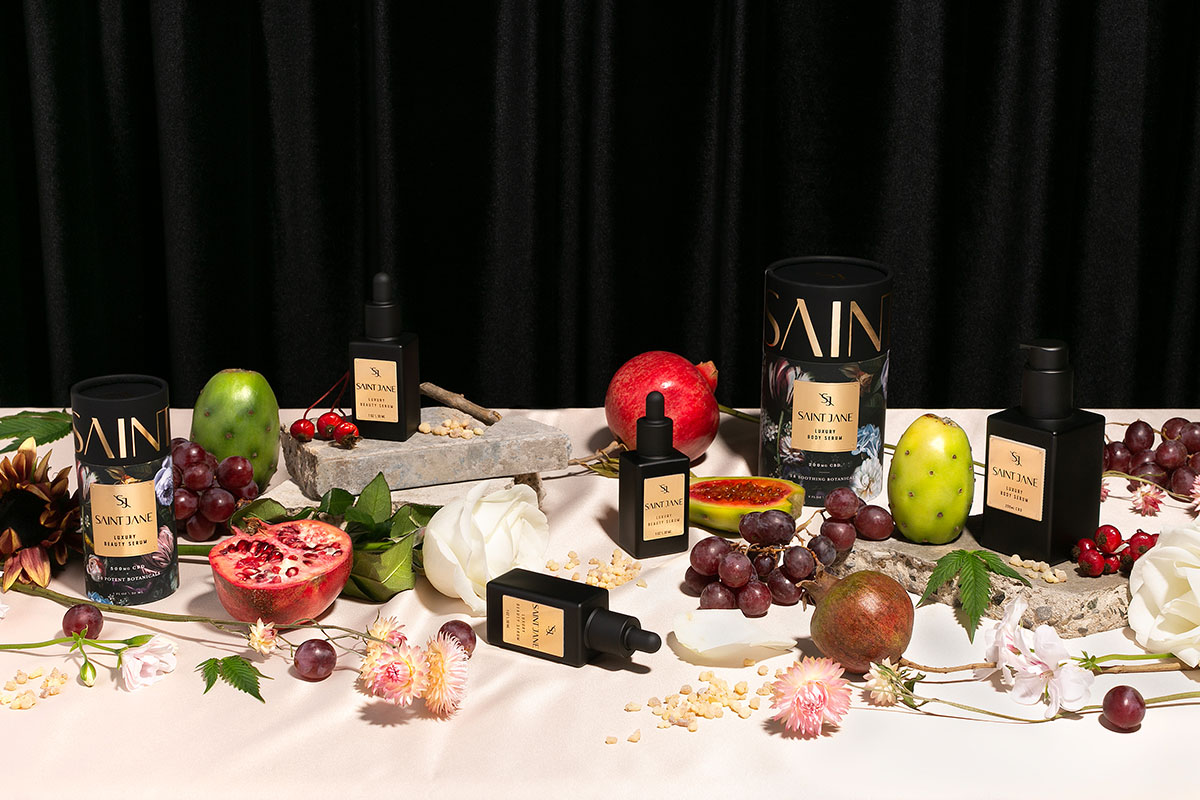
I think the biggest difference is the way we’ve crafted the products. It’s about the whole plant story and other botanicals that we pair with CBD. It’s not just CBD for the sake of it. We thoughtfully match CBD with botanicals that support the cannabinoid’s mission of calming, soothing and nurturing the skin.  The botanicals work in concert.

We’re also passionate about full-spectrum CBD — the whole plant extract — because we believe in the entourage effect. Rich endocannabinoid receptors in the skin benefit from those minor cannabinoids found in full-spectrum products.

We also believe in higher concentrations of CBD. When we started, there were a lot of debates around topicals and dosages. It felt so instinctual to me that a higher concentration would be most efficacious for the skin. My background in beauty taught me about performance and the end benefit. If your product works, you’re going to have people come back to you. I believe that our results-driven formulas really express that.

We’re also 100% clean. Our philosophy around clean is also non-negotiable. My second daughter was born very small, underweight. It’s called ‘Small for Gestational Age’ (SGA). We were terrified by that because my older daughter had been born at a normal weight. Juliet was shockingly tiny. We kept trying to figure out why and one of my doctors asked if I had been exposed to any chemicals while pregnant.  At the time, I was developing fragrances, nail polishes. So, I flashback to those windowless offices where I was developing those products and I couldn’t tell anyone I was pregnant yet — it was my first trimester. In the end, we’ll never know; it was inconclusive if there was a correlation. But since then, clean has been non-negotiable and if I was going to create my own product line and collection, it needed to be as clean as it gets. My daughter is amazing and thriving today, but I never would want someone else to go through that. Clean is essential to our ethos.

Transparency and testing are the last ones. Trust is important to us. It took me a long time to get comfortable with the vendors and suppliers that I chose when I started Saint Jane. Back before the Farm Bill, it was really like the Wild West. I didn’t know who to trust as I was getting these packages of white powder delivered to my home. Or these full-spectrum extracts in syringes. I went through my own vetting process with vendors. My mission was to find the best of the best. I retested everything myself with third-party vendors and was shocked to see what I received was often different from what the paperwork stated.

That integrity of testing has stayed integral to the brand since we launched. We test four times during the supply chain to make sure everything is matching up and that we can stand behind everything were putting out there. Every batch is different and we have to stay true to that dedication to the integrity behind it.

Saint Jane has just been stocked by Sephora stores. Congratulations on such an amazing achievement. Can you tell me about that process?

Sephora has been an amazing partner, they’ve been incredibly insightful about our brand, they see our potential, so it’s been really rewarding to work with them. Being in Sephora stores is a huge validation. We’re still so small, still so indie and we are just getting started. Even though I had Sephora experience, I didn’t think they’d take a little brand like ours within our first year. It’s very full circle for me and we’re so grateful for their partnership.

The retailers we work with have been incredibly supportive across the board, too. As a CBD brand, we can’t operate like other normal indie skincare brands with Facebook, Instagram and Google advertising, so our retailers have been our storytellers. They’ve been our platform for brand awareness. We feel so grateful.

You recently announced Dr. June Chin has joined the team as your Chief Medical Advisor. Can you tell me about what that means for Saint Jane?

Dr. Chin is a recognized name in the cannabis space. She’s a longtime advocate of CBD and its healing potential — and not just in skincare. Because we pride ourselves on clean clinical-grade formulas, it made sense to partner with a doctor who shares our passion. She’s just been next level on understanding the power of the plant and has a background in plant-based medicine. CBD is one of the many plant-based ingredients that she’s passionate about. It’s been extraordinary to see the product through her eyes and getting it right as we don’t want to take a misstep on information. We want to make sure we’re architecting the narrative of CBD’s efficacy in the right way.

Who is Saint Jane aimed and why?

I would say we hope to reach people who want to transform their skin, with the powerful benefits of CBD. People are becoming more and more aware of CBD’s potential and we have an extensive range of customers who use it and are loyal to us. Luxury Beauty Serum is our hero product and it’s focused on skin condition and treatment. It has 20 botanicals that all focus on reducing irritation, balancing and detoxifying the skin. We have customers in their twenties through to their seventies who are all using our products and seeing results.

If you’re having a bad moment with your skin, it can impact on your confidence. It must be amazing to have made something that has an impact on someone’s life.

Hearing from customers has been the most rewarding thing since starting the brand. I talk about it a lot with my team. That’s why we’re doing it, to help people. And that’s the legacy of Saint Jane that we’re trying to honor.
What’s next for Saint Jane?

We have so many things coming up on the horizon. I have more ideas than I’m allowed by my team to bring to market. It’s really about staying focused and disciplined on what we bring to market, to make sure that everything we introduce meets our standards.

How do you think the cannabis industry as a whole can be better?

For one, there is a lot of product out there that is not being produced and marketed responsibly. The products that work and are responsibly crafted are going to rise to the top and gain customer loyalty. I think as an industry we are architecting transparency and how brands communicate integrity. As an industry, we need to make sure we can have standards that ensure quality, education, transparency and as much consistency as we can with a highly botanical product. I want founders, I want companies, other brands to rise to the occasion, to honor the potential of CBD.

As the saying goes, “the rising tide will lift all ships” and that’s what I believe will happen.

What trend do you predict for the CBD and cannabis skincare market in the next five years?

My biggest hope is that CBD is regarded as a skincare ingredient like Vitamin C or Peptides. That’s number one. It deserves a place in that roster.

Number two, there are so many benefits to the minor cannabinoids found in the plant, like CBG and CBN. I think we’re just getting started in terms of understanding the benefits found in the entire plant. As a brand, we’re looking deeply into that. There are benefits that have not been fully explored yet. It’s exciting and in the next year, the next five, we’re going to learn a lot about the minor nutrients in the whole plant.

People like you are setting the standard of this next generation of cannabis products.

Thank you, we’re trying. And, we are willing to put in the work to accomplish this.

What do you wish you knew when you started out in cannabis entrepreneurship?

I think there’s entrepreneurship and then there’s cannabis entrepreneurship. I would say with entrepreneurship, you have to be so comfortable with ambiguity and uncertainty. Becoming a founder is committing to a lot, essentially a new life.  You’ve got to be ready to ride the rollercoaster, get used to not sleeping. The cannabis side is its own endless roadblocks, with payment processing issues, advertising headwinds, which I didn’t expect. I wish I’d know some of the challenges we were going to be up against.

Any pearls of wisdom that you’d like to bestow to other women who want to enter the cannabis industry?

Do it. Do it! Do it! Do it! There’s a fabulous group of women as leaders in the cannabis industry. There’s a real sense of community and I think that is unique. It’s very unique in beauty, certainly – which as an industry is comprised of mostly men. There’s so much opportunity out there. It is like post-Prohibition. Think about how many wine brands, alcohol brands, spirits, beer, have launched since prohibition. This is a new time, a new era. I think CBD benefits women so deeply. There’s something about the molecule and women that’s so powerful. It’s a very unique combination. I would say yes….  if you see an opportunity, go for it!

Finally, what are three things it takes to be a cannabis entrepreneur?

Patience. Agility. Integrity. I would say these are the top three. It has to go deeper than just being a market opportunity or a buzzword.  In cannabis, you have to be doing it for the right reasons in order to break through and to endure the saturation that’s coming.

Industry Innovators

Auxly’s Cannabis Sales Rise as Last Year’s One-Time Gain Complicates the Profit Comparison

The Canadian cannabis producer’s revenue and operating cash figures improved, while its headline net-income comparison tells a different story.

Published

on

An aisle between warehouse racks filled with cardboard boxes

Auxly’s third-quarter cannabis results offer two headlines that need to be read together. Net revenue increased 24 percent from a year earlier to C$49.5 million, while reported net income declined. The difference does not mean the sales growth disappeared; it reflects, in part, a comparison with a prior-year quarter containing a substantial one-time gain.

The Canadian cannabis producer released its results November 12, 2026 for the three months ended September 30. Its accompanying financial statements and management discussion are dated November 11. Amounts here are Canadian dollars, avoiding a misleading comparison with U.S.-dollar figures reported by other cannabis companies.

Sales growth and the profit comparison

Auxly’s news release reports adjusted EBITDA of C$15.8 million, up 29 percent, and net income of C$13.6 million, compared with C$20.5 million a year earlier. Management notes that the 2025 comparison included a C$8.1 million after-tax gain related to the Imperial debenture settlement.

That creates a reason to examine the components of earnings rather than selecting whichever headline looks most dramatic. A settlement gain can raise reported profit without representing repeatable sales of cannabis. Conversely, removing selected items produces a different measure whose definition and reconciliation still need to be understood.

Adjusted EBITDA is not the same as net income, and neither is simply the amount of cash available for expansion. Auxly identifies adjusted EBITDA as a non-GAAP measure and directs readers to its reconciliation. The useful comparison is between consistently defined measures over time, with the excluded items visible.

The financial statements add a cash distinction

The interim statements report C$14.3 million of net cash provided by operating activities during the quarter. That differs from the C$14.8 million figure before working-capital changes highlighted in the announcement. Both can be accurate because they describe different stages of the cash-flow calculation.

Working capital includes movements in items such as receivables and inventory. A measure calculated before those movements helps isolate one aspect of performance, but it cannot answer every question about cash actually generated during the period. The statements provide the bridge between the two numbers.

At September 30, the statements show C$51.4 million in cash and cash equivalents. That is a balance at a particular date. It should not be confused with the quarter’s revenue, its net income or a promise that the entire balance will be spent on new production.

The statements also label the interim figures unaudited and explain that share and per-share amounts reflect the July 28 share consolidation. Those details matter when comparing old share counts or earnings per share, even though they do not change the basic story about cannabis sales.

Flower and pre-rolls remain central

The management discussion says dried flower and pre-roll products accounted for approximately 64 percent of quarterly net revenue, with the balance from the company’s other cannabis product categories. It attributes year-over-year sales growth to higher volumes across core products and improved flower pricing, partly offset by pressure on vape prices.

That is more informative for readers following the cannabis shelf than an undifferentiated growth percentage. Different formats can move in different directions at the same company. Higher total revenue does not establish that every product category gained pricing power or that every retailer saw the same demand.

The filing also describes the role of Auxly Leamington in cultivation and processing. An integrated production footprint can support supply, but its existence alone does not demonstrate consumer preference, product quality or a future sales result. Those claims require evidence beyond the size of a facility.

The previous quarter supplies context

Auxly’s August 13 second-quarter announcement reported C$45.8 million in net revenue and C$14.3 million in adjusted EBITDA. The third-quarter figures are higher than those earlier results, as well as higher than the year-earlier revenue and adjusted EBITDA comparisons. That is a useful check on the direction of the reported business.

Quarter-to-quarter changes are still different from a sustained trend. Product launches, customer ordering and seasonal patterns can affect individual periods. A single quarter does not establish the eventual return on a capital project or the success of an export strategy.

Our earlier coverage of Weedmaps’ tougher advertising quarter illustrated another part of the cannabis economy. The companies have different business models and reporting measures, so their results should not be treated as interchangeable signals for the whole industry.

For Auxly, the next useful tests are continued demand, cash generation after working-capital movements and the results of planned investments. The present filing supports a specific conclusion: cannabis revenue and several operating indicators improved, while the reported net-income comparison requires attention to last year’s exceptional items.

Illustrative warehouse stock photograph; not an Auxly facility or identified cannabis inventory. Photo: Russ Murray / Unsplash.

Continue Reading

Cannabis

Charlotte’s Web Reports Lower CBD Sales but a Narrower Quarterly Operating Loss

The hemp-derived CBD company’s latest results show why lower revenue and an improving quarterly loss can coexist—and why neither resolves the policy outlook.
Published

on

Empty amber glass bottles arranged on a light surface

Charlotte’s Web reported a difficult sales quarter for its hemp-derived CBD business while narrowing its operating loss. Revenue for the three months ended September 30, 2026 was US$9.4 million, down 18.3 percent from a year earlier. Its operating loss narrowed to US$3.7 million from US$5.3 million, showing why the direction of sales and the direction of a loss do not always match.

The company announced the results November 12 and filed its quarterly report with the U.S. Securities and Exchange Commission. The release attributes weaker revenue primarily to California restrictions that took effect in July, reduced promotional discounting and softer demand in parts of the hemp-wellness market. Those explanations are management’s account of the quarter, rather than an independent measurement of every factor affecting CBD shoppers.

Less revenue does not automatically mean a larger loss

The company’s earnings release reports quarterly gross profit of about US$4.4 million, compared with US$4.5 million a year earlier, even as sales fell. Gross margin improved to 46.9 percent from 38.9 percent. Selling, general and administrative expenses declined to US$8.1 million from US$9.7 million.

A percentage margin and a dollar profit measure answer different questions. A company can retain a larger share of each sales dollar while bringing in fewer dollars overall. Lower expenses can then narrow the operating loss without putting the business into operating profit. That is the distinction these results require.

The announcement also identifies an inventory reserve linked to simplifying the product range. Readers should therefore resist interpreting a single margin percentage as a permanent new baseline. Product mix, pricing, manufacturing costs and inventory adjustments can all affect the calculation.

The quarterly filing keeps the periods straight

The Form 10-Q records quarterly revenue more precisely at US$9.393 million and a net loss of US$3.458 million. These rounded to the US$9.4 million revenue and US$3.5 million net loss in the announcement. An operating loss and a net loss are different lines of the accounts, not conflicting reports of one number.

The nine-month picture is also distinct from the latest quarter. The release reports a US$20.7 million net loss for the first nine months, including noncash items associated with the earlier debenture conversion. It would be misleading to describe an improved third-quarter operating loss as proof that every year-to-date earnings measure improved.

The filing shows US$11.364 million of cash and cash equivalents at September 30. Cash on that date is a financial-position measure, rather than sales or profit earned during the quarter. Looking at the income statement and cash-flow statement together gives a fuller picture than treating a positive cash balance as evidence of profitability.

Hemp policy remains part of the business story

Cannabis policy is directly relevant to this CBD company because the legal definition of hemp determines which products can use that route to market. The Congressional Research Service’s October 28 legal sidebar explains that the federal delay does not move every element of the new definition to the same date. It distinguishes the treatment of certain cannabinoids not naturally produced by the plant from provisions delayed until December 11.

That distinction is useful beyond one company. A hemp-derived label does not settle a product’s future legal status, and a federal deadline does not automatically override a state’s separate rules. Consumers and businesses need to identify the applicable product definition, ingredients and jurisdiction.

Charlotte’s Web’s October 28 announcement said it planned to hold a corporate update after December 11 rather than a November earnings call, seeking greater policy clarity before discussing its outlook. That is a communications plan, not evidence that Congress will produce the outcome the company prefers.

Product access and medical evidence are separate

A financial report from a CBD business does not establish that a product treats a disease or is appropriate for a particular person. Sales trends describe commercial activity. They do not measure a clinical benefit, and a discussion of future healthcare distribution should not be mistaken for a new drug approval or a general reimbursement entitlement.

Our coverage of Willie Nelson’s hemp-policy appeal addresses the public debate over access. Charlotte’s Web’s results supply a different perspective: how a company says restrictions, pricing decisions and expenses are affecting its accounts. The two stories illuminate different parts of the same policy uncertainty.

The next meaningful business signals will include the durability of any sales recovery, spending levels and the details of the legal framework actually in force. For now, the results show a smaller quarterly operating loss alongside lower CBD revenue. They do not yet resolve whether the company can turn that improvement into sustained growth and profitability.

Illustrative empty-bottle stock photograph; not Charlotte’s Web packaging or identified CBD products. Photo: Kelly Sikkema / Unsplash.

Continue Reading

Industry Innovators

Portland Weighs Cannabis Pickup Windows and Licensing Payment Changes

Portland’s cannabis pickup-window and licensing proposal remains under review, with the city record listing a December 8 committee meeting.

Published

on

Portland waterfront buildings seen across the river

Portland is considering removing a city-code restriction on cannabis drive-through and walk-up sales, but the proposal has not become a new retail permission. The city’s record for Ordinance 2026-407 shows the November 10 City Life Committee item was continued, with December 8 listed as its next meeting date.

The proposal introduced by Mayor Keith Wilson combines two subjects: updating the language governing exterior sales windows and revising the way licensing-payment provisions appear in city code. For cannabis shoppers, the first is about how a purchase might be collected. For operators, the second concerns the timing and administration of license costs.

A retailer considering a physical alteration would still need to assess the property and any other applicable approvals. Removing one cannabis-specific sales restriction is not the same thing as approving a building project.

The window restriction is specific

Portland’s current marijuana licensing chapter bars sales from vendor carts, temporary structures, satellite locations and exterior openings such as drive-through facilities or walk-up windows. The proposed amendment would remove the exterior-opening language while retaining restrictions on those other kinds of sales locations.

That is narrower than allowing cannabis sales anywhere a customer can drive or walk. A licensed premises would still be a particular business location, subject to the rest of its applicable requirements. The change concerns a method of serving customers, not the disappearance of the licensing system.

City materials say the amendment would align Portland’s wording with Oregon rules that made on-site delivery a permanent option in September 2020, following temporary pandemic arrangements. That history helps explain why the debate is framed as an update to conflicting language rather than a brand-new statewide retail model.

Convenience does not mean on-site consumption

One important boundary remains in the proposed code exhibit: the provision against consumption on licensed premises is retained, with its existing narrow employee exception under Oregon law. A pickup window and a consumption lounge are different activities.

The same exhibit retains operating-hour and security requirements. Its redline shows a targeted deletion concerning sales openings, rather than an across-the-board removal of the rules governing retail premises. Reading the actual proposed changes is more informative than assuming that the phrase drive-through implies a completely different type of store.

For a customer, the practical questions would still include whether a specific retailer offers a service, how the order is handled and which rules apply. A citywide code amendment, if adopted, would not guarantee that every shop installs a window or changes its property layout.

The payment provisions affect operators differently

The ordinance also addresses the Deferred Payment Program for license fees. The city’s explanation says a 50% initial payment better supports collection and that the code should refer to the council-approved fee schedule rather than preserve outdated dollar amounts.

That is a distinction between the text of the code and the administration of a program. City materials say programmatic changes were communicated in June and July and implementation began in August. The proposal would codify practices already in place, according to the city, rather than introduce every payment change for the first time.

Operators evaluating the proposal therefore need both the amended text and the applicable fee schedule. A headline about pickup windows does not explain a business’s entire licensing bill, and an old fixed amount quoted from code may not describe current program administration.

Businesses are raising questions about cash flow

In KPTV’s November 10 reporting, Mikhala Armstrong described support for greater accessibility alongside concerns from cannabis operators about payment obligations and late fees. Those interviews add an important perspective to the city’s stated goal of improving administration.

The two views are not interchangeable. The city describes its intended program effects; individual operators describe how they believe the arrangements affect their businesses. A final assessment should distinguish those accounts from evidence about what happens after implementation.

Our coverage of Missouri’s interstate cannabis guidance concerned a separate jurisdiction, but illustrates a related point: legal cannabis markets remain governed by specific rules at different levels. A state allowance does not make every local detail irrelevant.

The next step is still a public decision

The city’s document history is the place to follow whether the committee advances or amends the proposal. As of this review, its status is continued, not adopted. Readers should check the updated agenda before relying on the December meeting listing or making plans to offer a new service.

The potential change is concrete: remove a particular restriction on how licensed cannabis stores serve customers and bring fee language into line with current administration. Whether that becomes the final city policy remains the question before Portland, rather than a decision already made.

Illustrative Portland waterfront photograph; not a dispensary or proposed pickup site. Photo: Meggyn Pomerleau / Unsplash.

Continue Reading

Trending

Join The Cannabis Aficionado Community!
Join the Cannabis Aficionado community and receive all of the most relevant news geared towards our sophisticated enthusiast community.
Loading

Copyright ©️ 2026 Cannabis Aficionado. Cannabis Aficionado is a registered trademark of CNM Inc. All rights reserved. Registration on or use of this site constitutes acceptance of our Terms of Service, Privacy Policy and Cookies Policy. People may receive compensation for some links to products and services. Offers may be subject to change without notice.